About Me

I am Dipan Sadekeen, a researcher and engineer working at the intersection of artificial intelligence and cybersecurity. I completed my B.Sc. in Computer Science from the Military Institute of Science and Technology (MIST), Bangladesh, and have over three years of experience as a Data Analyst in the telecom industry.

I am currently pursuing my PhD in Computer Science from Florida International Univeristy, Miami, FL, USA. My research interest lies in Data Analytics, Predictive Modeling and AI in cybersecurity.

profile

Education

Florida International University (FIU)

Ph.D. in Computer Science 🎓 Current

Jan 2025 – Present · Miami, FL · CGPA: 4.00 / 4.00

Military Institute of Science and Technology (MIST)

B.Sc. in Computer Science and Engineering

Jan 2017 – Dec 2020 · Dhaka, Bangladesh · CGPA: 3.50 / 4.00

Notre Dame College

Higher Secondary Certificate (HSC), Science

Jun 2014 – Jun 2016 · GPA: 5.00 / 5.00

Ideal School and College

Secondary School Certificate (SSC), Science

Jan 2012 – Feb 2014 · GPA: 5.00 / 5.00

Employment History

Research Assistant

Analytics for Cyber Defense (ACyD) Lab, Florida International University

Dec 2024 – Present · United States (On-site)

RAFM Expert

Grameenphone Ltd · Full-time

Jul 2023 – Jan 2025 · Dhaka, Bangladesh

Specialist, Revenue Assurance

Robi Axiata Ltd · Full-time

Oct 2021 – Jul 2023 · Dhaka, Bangladesh

DevOps Engineer Intern

Samsung R&D Institute Bangladesh · Internship

Jul 2021 – Sep 2021

Industrial Attachment

Trust Bank Limited · Internship

Dec 2019 – Jan 2020 · Dhaka, Bangladesh

Research & Publications

Published

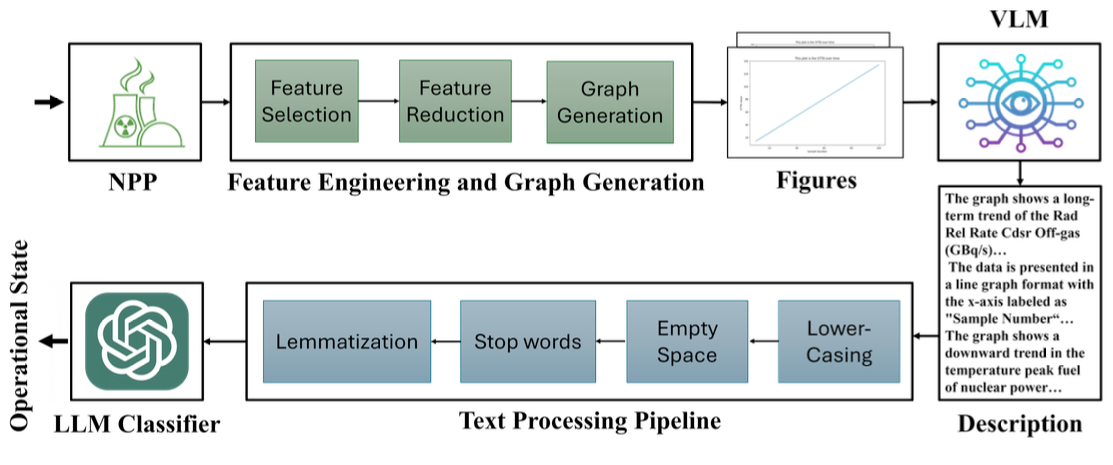
Vision-Driven Fault Diagnosis in Nuclear Power Plants using LLM/VLM

NPIC & HMIT 2025

This work introduces a new framework that combines visual and textual reasoning to make fault diagnosis in nuclear power plants both accurate and interpretable. The model fuses vision-language models (VLM) with large language models (LLM) to analyze sensor images, logs, and fault reports, generating human-readable explanations of detected faults. It achieved ~92% accuracy compared to 94% in traditional machine learning models, providing interpretability over traditional deep learning black boxes.

Domain: LLM, VLM, Multimodal AI, Industrial Fault Detection, Nuclear Power Plants
Tools: Python, PyTorch, OpenAI GPT, CLIP, Pandas, Matplotlib

Read Paper PDF Link
NPIC paper thumbnail
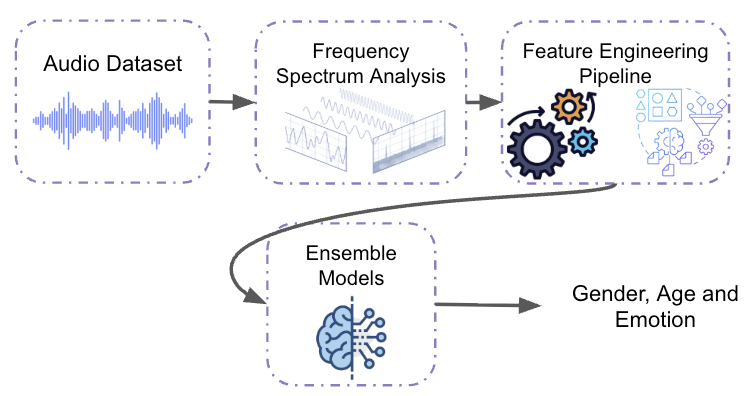
One Source to Detect Them All: Gender, Age, and Emotion from Voice

IEEE COMPSAC 2021

This research developed a single model to classify gender, age, and emotion from voice data. Using frequency-domain feature extraction, the model learned statistical patterns that help identify demographic and emotional traits from speech. The study demonstrated that simple features from sound can achieve competitive results for complex tasks like emotion recognition.

Domain: Audio Analytics, Machine Learning
Tools: Python, R, Scikit-learn

Read Paper PDF Link
COMPSAC paper thumbnail
How Usability and User Experience Vary Among m-Commerce, AR, and VR Interfaces

Springer Book Chapter, 2022

This study compares how users experience online shopping through mobile (m-commerce), augmented reality (AR), and virtual reality (VR) apps. Participants interacted with different shopping environments, and their feedback revealed that AR provides the most natural experience, while VR feels less intuitive. The results guide better design for immersive e-commerce interfaces.

Domain: Human-Computer Interaction (HCI), AR/VR, Usability Testing
Tools: Unity

Read Paper PDF Link
AR/VR usability paper thumbnail

Submitted

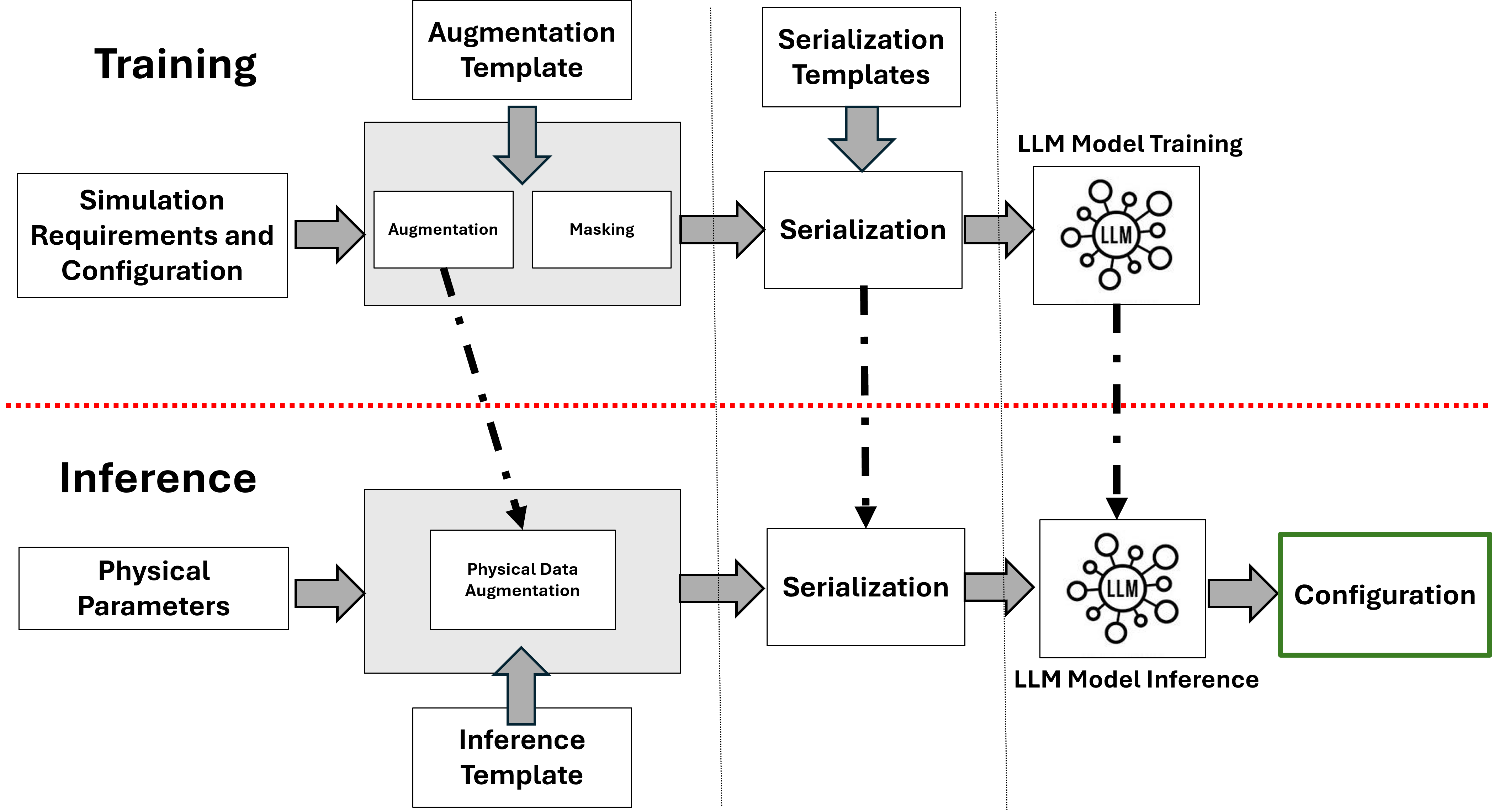
LLMs to Close the Simulation-to-Reality Gap in Wireless Mesh Networks

Submitted to IEEE INFOCOM 2026

Wireless Mesh Networks (WMNs) are often configured using simulations, but their real-world performance drops due to hardware variations and environmental uncertainty. This work introduces a large language model (LLM)-based framework that learns from simulated data and adapts to real deployments without retraining. The approach represents network configurations and outcomes in natural language, helping the model understand and generalize across domains. It achieved up to a 13% improvement in configuration accuracy and a 20% reduction in the simulation-to-reality gap compared to existing deep learning methods, showing that LLMs can make network optimization more reliable and efficient.

Domain: Wireless Mesh Networks, Domain Adaptation, Zero Shot Modeling
Tools: PyTorch, HuggingFace Transformers, WirelessHART

Preprint (Coming Soon)
Zero-shot adaptation paper thumbnail

In Progress

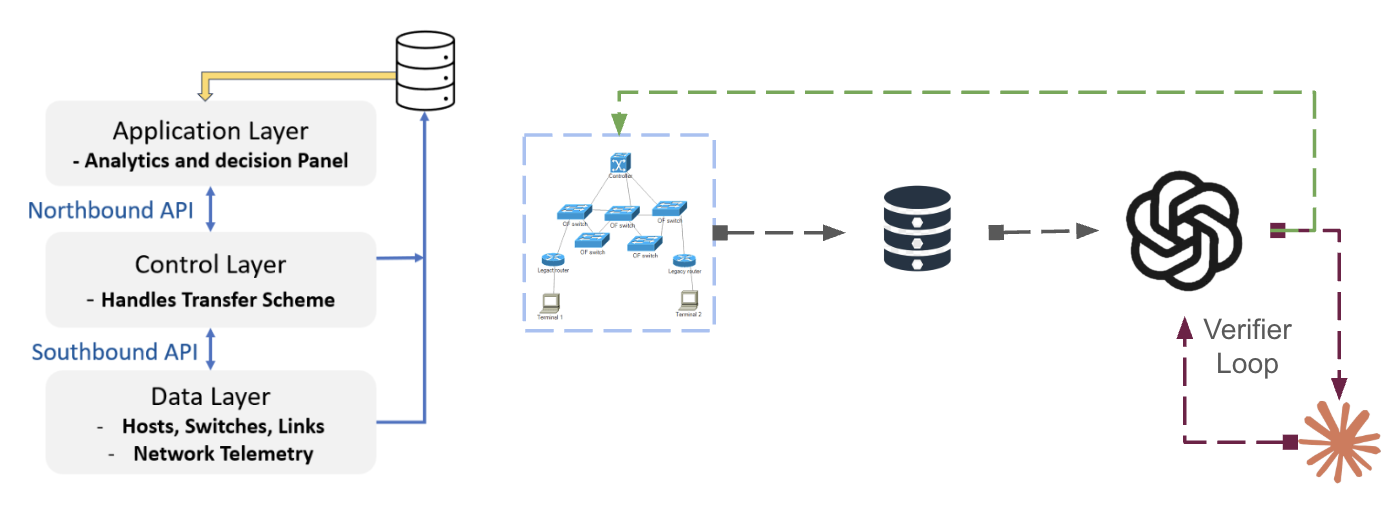
LLM-Driven Moving Target Defense for Smart Grid Systems

Research & Development Phase

Smart grids rely on interconnected cyber networks for coordination and communication between control systems, making them vulnerable to attacks such as Man-in-the-Middle, False Data Injection, and DDoS. These threats can compromise operational data and potentially cause large-scale power disruptions. This work focuses on developing an adaptive Moving Target Defense (MTD) framework that responds to evolving attack patterns while keeping system overhead low. Large language models (LLMs) are integrated to interpret network behavior, predict intrusion tendencies, and guide intelligent, proactive defense strategies—enhancing grid resilience against modern cyber threats.

Domain: AI in Cyber-Physical Systems, SDN, Moving Target Defense
Tools: Mininet, ONOS, Python, LLM-based Strategy Model

Ongoing Research
MTD project thumbnail

Projects & Applied Works

Time-Series Based Data Pack Purchase Trend Analysis System 🏢 RAFM Project

Developed a time-series–based telecom analytics system to detect anomalies and declining trends in customer data pack purchases. The system models temporal sales patterns to identify deviations from historical behavior and highlight early indicators of churn, market saturation, or user preference shifts. Predictive analysis enables segmentation of affected customer groups for targeted product redesign and retention strategies. The framework integrates seasonality and holiday adjustments to reduce false positives and deliver accurate, actionable insights for strategic business decisions.

Tools: Python, Pandas, Prophet, Tableau
Skills: Time-series analysis, anomaly detection, data visualization, telecom analytics

Web Scraper for Automated Product & Market Trend Monitoring with LLM 🏢 RAFM Project

Developed an automated market intelligence platform that continuously monitors online sources to identify new product launches and service updates across key competitors. The pipeline performs large-scale data scraping, filtering, and entity extraction, followed by LLM-based summarization and verification to ensure contextual accuracy. A reinforcement feedback loop refines model responses over time, improving relevance and reducing noise in insights delivered to business teams.

Domain: Web Automation, Language Models, Business Intelligence
Tools: Python, BeautifulSoup, HuggingFace Transformers, Streamlit

LLM-Based HoneyPot for UAVs 🚧 In Progress

Designed a drone honeypot using AirSim simulation and LLM reasoning to detect malicious intent in autonomous aerial systems. The system combines sensor-based anomaly tracking and contextual intent analysis to identify spoofing and command injection attempts in real-time drone communication.

Domain: Cybersecurity, Simulation, AI Safety
Tools: AirSim, Python, PyTorch, FAISS, OpenAI API
Skills: Simulation, AI reasoning, drone security analytics, autonomous systems

Time-Series Based River DO (Dissolved Oxygen) Prediction 🎓 Academic Project

Developed a time-series forecasting model to predict river water quality trends based on dissolved oxygen (DO) data collected from multiple river monitoring stations. The models ARIMA and SARIMAX were applied to estimate DO fluctuations and seasonal variations, supporting early detection of environmental degradation in urban waterways.

Domain: Environmental Analytics, Time-Series Forecasting, Water Quality Modeling
Tools: Python, Pandas, Matplotlib

E-Waste Management System 🎓 Academic Project

Developed as a database systems course project, this application provides a three-user architecture with dedicated dashboards for Admin, User, and Employee. The system manages end-to-end waste collection and recycling workflows, maintaining logs for requests, assignments, and disposal tracking. It focuses on ensuring structured e-waste management with clear data handling and interface segregation for different roles.

Domain: Database Systems, Web Application Development
Tools: MySQL, Laravel, Bootstrap, HTML

News

Contact

Email: dipan.sadekeen@gmail.com

Google Scholar: Scholar Profile

LinkedIn: LinkedIn Profile

GitHub: Github

YouTube: YouTube Channel

© Dipan Sadekeen